

Trump’s VA Tried to Quietly Cut Disabled Veterans’ Benefits. We Forced a Retreat.
The proposed federal rule is gone — but the legal fight that could resurrect it isn’t over.


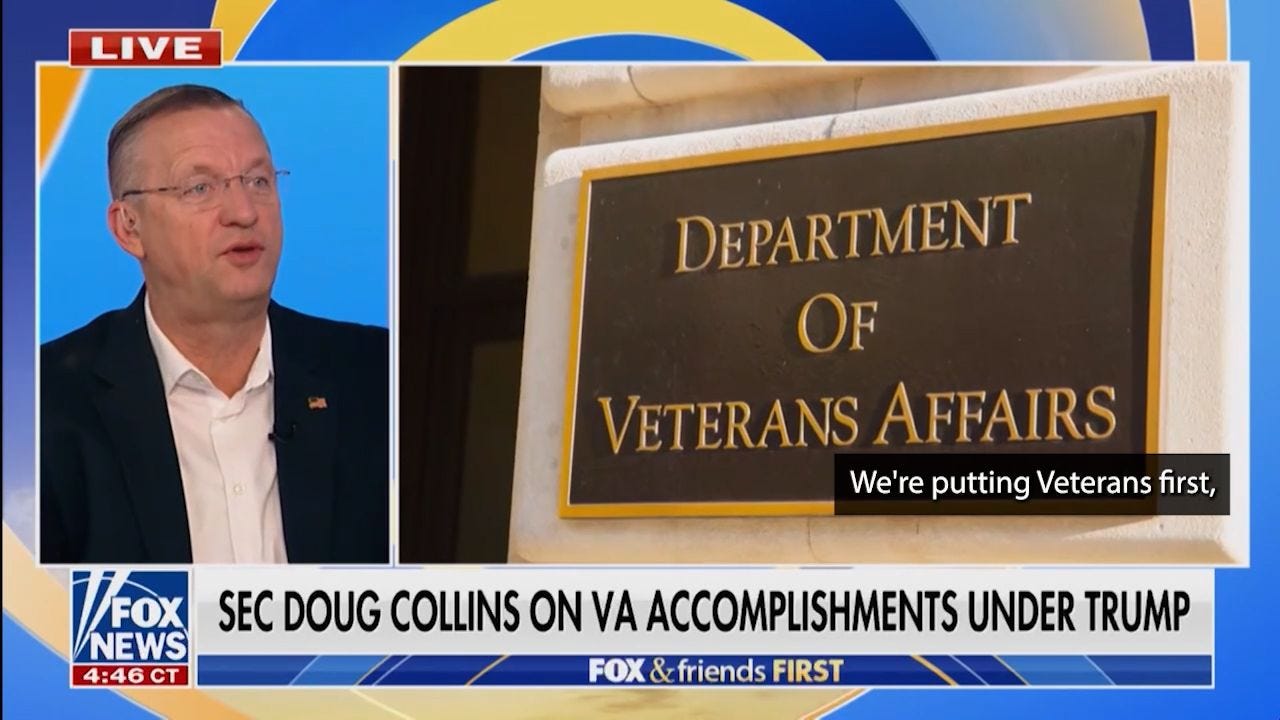
On February 17, the Department of Veterans Affairs quietly issued an interim final rule that would have allowed disability ratings to be lowered if a veteran’s medication improved their symptoms.
Nine days later, the rule is gone.
Not paused.
Not suspended.
Not “under review.”
Rescinded.
The VA has officially withdrawn the rule and restored the prior regulatory text.
That didn’t happen because the Trump Administration suddenly discovered a commitment to veterans.
It happened because veterans, families, VSOs, members of Congress, journalists, and ordinary citizens spoke up — loudly and quickly.
Public pressure worked.
And that matters.
From last week:

When the rule was first issued, it attempted to change how the VA evaluates disability compensation in direct opposition to the way that courts have already ruled.
Under the proposed framework, examiners could rate a veteran based on how they function while on medication.
If your PTSD meds helped you stabilize, you could look “less disabled.”
If your pain meds let you move, you could look “less impaired.”
If treatment made your symptoms manageable, compensation could reflect that appearance — not the underlying condition.
That’s like saying an amputee shouldn’t get their full disability rating if they can walk with a prosthetic.
That approach directly collided with existing court precedent — particularly the 2025 case Ingram v. Collins, where the Court of Appeals for Veterans Claims held that the VA cannot discount the severity of a service-connected condition simply because medication improves symptoms unless the rating criteria specifically account for medication.
In other words: the law already protected veterans from being penalized for seeking treatment.
The interim rule attempted to sidestep that protection.
Veterans noticed.
And we responded. Quickly and forcefully.
In just over a week:
The rule was published.
A small handful of reporters covering the VA beat highlighted veterans service organizations’ objections.
Veterans and their families shared their lived experiences on social media.
Secretary Collins called the outrage “fake news.”
Members of Congress demanded answers.
Thousands of Americans submitted public comments opposing the rule.
The Secretary halted enforcement.
We kept demanding the rule be fully rescinded.
This morning, the VA met those demands.
The Department itself acknowledged that leaving the rule in place could undermine confidence in the benefits system and create uncertainty for veterans.
We exposed what Collins was doing, and made his position untenable.
That only happens when people engage.
Celebrate This Victory, But Don’t Let Your Guard Down
This is a real win.
Veterans’ benefits were protected.
The regulatory text has been restored.
But the underlying legal fight is not over.
The interim rule was, in part, a response to the Ingram v. Collins decision. And the Administration, through the Department of Justice, is still positioned to challenge that precedent in higher courts.
If the Federal Circuit overturns Ingram, the legal protection that prevents the VA from considering the ameliorative effects of medication could disappear.
If that happens, the same policy outcome could return — not through rulemaking, but through court decision.
So, we won the regulatory battle.
But the judicial front remains open. The Department of Justice is still positioned to argue that veterans can be rated based on medicated performance.
If VA leadership truly believes veterans should not be penalized for taking prescribed medication, the cleanest signal would be withdrawing any appeal that seeks to weaken Ingram.
Until that appeal is withdrawn or resolved, the underlying legal threat remains. If Ingram is overturned, the same outcome could return — this time through judicial precedent instead of rulemaking. And that way the Trump Administration gets to try to tell veterans to blame the courts.
This episode proves something important.
The narrative that “public outrage doesn’t matter” is wrong.
The idea that “we can’t do anything to stop the Trump Administration” is false.
The idea that they can move so fast no one notices is wrong.
Secretary Collins reversed course because the political cost became too high. Veterans across the ideological spectrum understood what was at stake. When promises to those who served are threatened, the response is not partisan — it’s personal.
Veterans are politically powerful — though Trump often tries to reduce us to being used as political props, the country understands that breaking promises to those who served carries consequences.
That power should be used carefully, strategically, and consistently.
And on that note, I’d like to invite veterans from around the country to use that power next week to stand up for Minnesota and their opposition to the occupation by ICE.
Please join me next Friday, March 6 either in-person in Minneapolis or virtually on our livestream at AbolishICE.live for a free tribute concert headlined by the Dropkick Murphys. We’ll honor the lives of Renee Nicole Good and Alex Pretti, and raise funds for the local communities that they were murdered for protecting. More details here:
 |
|
💙💙💙
There is nothing to low for this regime.